Temples of Angkor
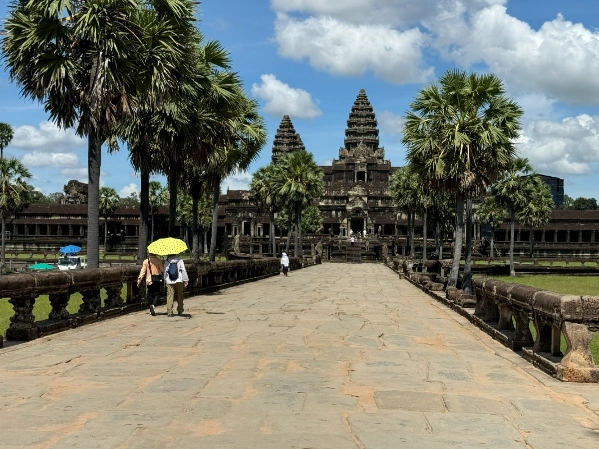
The temples of Angkor in Cambodia are one of the world’s foremost ancient sites and a must-visit destination, rivalling the pyramids and the Tal Mahal in scale and detail. Angkor Wat, the largest religious monument in the world, is a highlight of the complex, featuring intricate carvings and impressive architecture. The ruins of Angkor Thom, including the Bayon Temple with its giant stone faces, offer a glimpse into the region’s rich history. Ta Prohm, with its jungle-covered structures, is a unique example of nature reclaiming ancient architecture. Other notable temples include Banteay Srei, dedicated to the Hindu god Shiva, and Preah Khan, with its sprawling complex. Visiting at sunrise or sunset can be particularly memorable, with the temples taking on a striking appearance in the golden light.
Highlights
Angkor Wat
↓
↑
Angkor Wat is a must-visit temple complex in Cambodia, featuring intricate carvings and stunning architecture. This majestic temple, the largest religious monument in the world, is a UNESCO World Heritage site and a symbol of Khmer culture. Built in the 12 century by Suryavarman the second, a vast moat surrounds it’s 800m long central temple complex which is 55m high. Best visited at sunrise or sunset, Angkor Wat is a photographer’s dream, with its golden light casting a magical glow on the ancient stones.
Angkor Thom
↓
↑
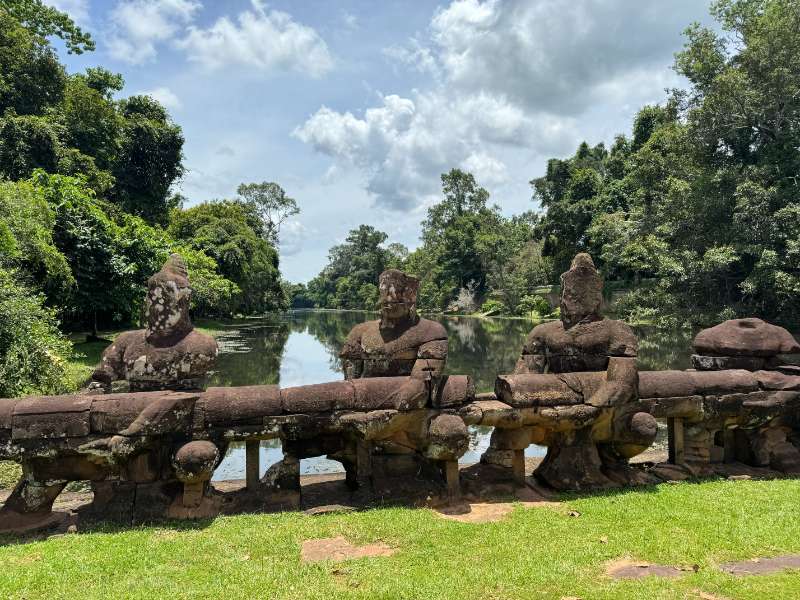
Angkor Thom is even bigger that Angkor Wat. It covers over 10Km2 and surrounded by an 8m high wall, 12Km in length, which, in turn is encircled by a 100m wide moat! This last great capital of the Khmer empire, features intricate carvings and stunning architecture. In the centre of the walled enclosure, are the city’s most important monuments, including Bayon, Baphuon, the Royal Enclosure, Phimeanakas and the Terrace of the Elephants

Bayon
↓
↑
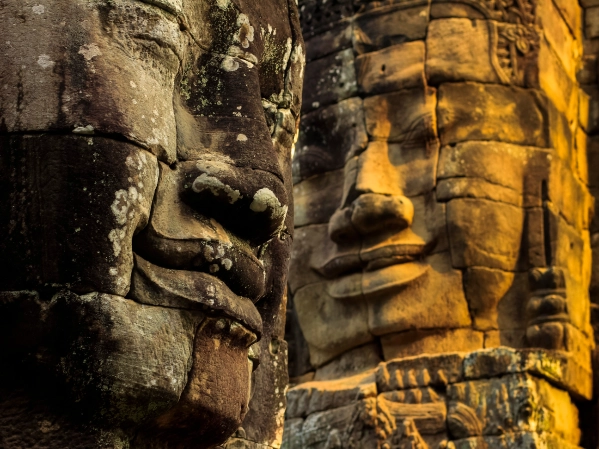
The Bayon Temple, located in Angkor Thom, is a fascinating site, famous for 54 gothic towers decorated with 216 giant stone faces. This ancient temple, built in the 12th century, features intricate carvings and ornate details, with a total of 1.2Km of extraordinary bas-reliefs incorporating more than 11,000 figures. You can explore the temple’s three levels, discovering hidden passages and stunning views of the surrounding jungle.
Ta Prohm
↓
↑
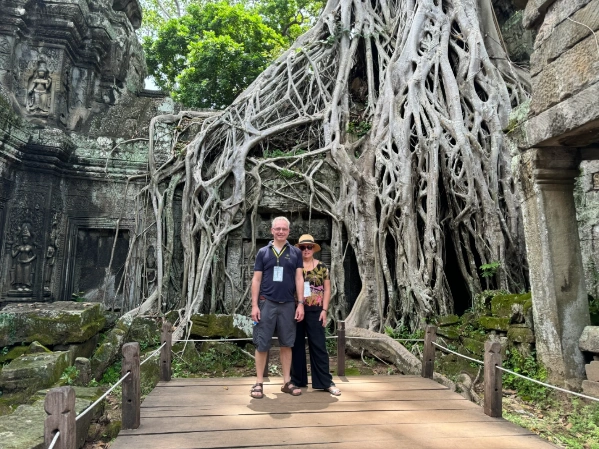
Ta Prohm, nicknamed the Tomb Raider temple, is a unique blend of ancient architecture and natural beauty. This 12th-century temple is famous for its jungle-covered structures, with giant trees and vines entwining the stones and engulfing the structures, creating an unforgettable atmosphere. Ta Prohm’s eerie, atmospheric beauty has made it a favourite among photographers and history enthusiasts, offering a glimpse into the region’s rich and mysterious past.
Preah Khan
↓
↑
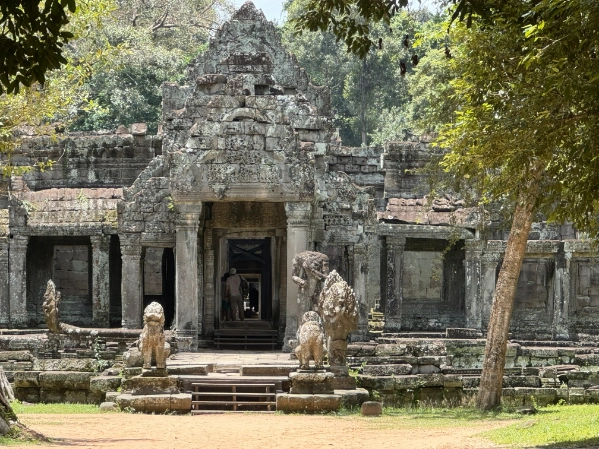
Preah Khan was built in the 12th century for King Jayavarman VII to honour his father. It was the centre of a substantial organisation, with almost 100,000 officials and servants. It has a basic plan of successive rectangular galleries around a Buddhist sanctuary with by Hindu satellite temples and numerous later additions. Like the nearby Ta Prohm, Preah Khan has been left largely unrestored, with numerous trees and other vegetation growing among the ruins.
Preak Neak Poan
↓
↑
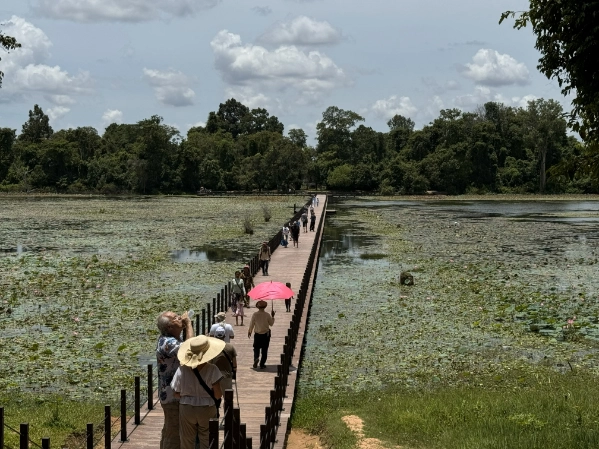
The image, above shows the walkway across a lilly covered lake (Jayatataka Baray), to the artificial island containing the Mahayana Buddhist temple of Preak Neak Poan. The temple has four pools representing Water, Earth, Fire, and Wind which were believed to have healing properties.
Sra Srang
↓
↑
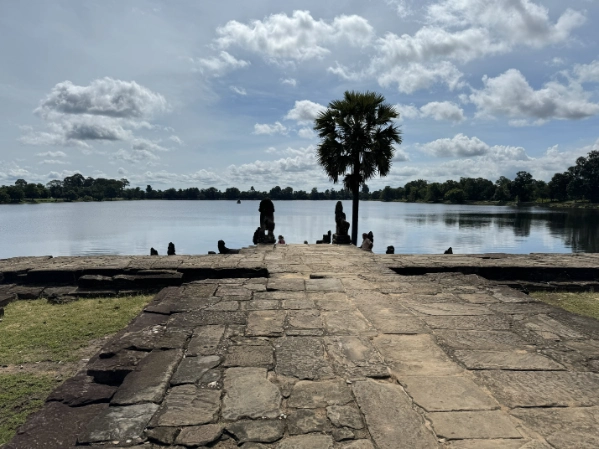
Sra Srang baray (reservoir) is believed to have been dug in the mid-10th century and modified around the early 13th century by Jayavarman VII, who added the terrace/landing stage with its carved lions and snakes. It is best seen as the sunrises over the water.
Banteay Srei
↓
↑
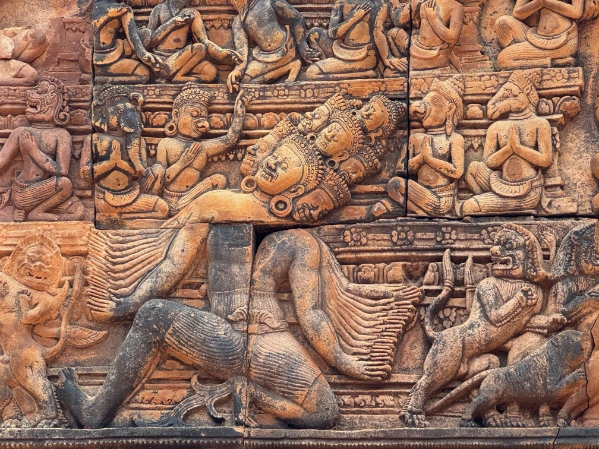
Banteay Srei, begun in AD967, it is one of the smallest sites in Angkor but its red sandstone carvings are wonderfully well preserved.
This temple is dedicated to the Hindu gods Shiva and Parvati.
Hotels
Tours
Coming soon.