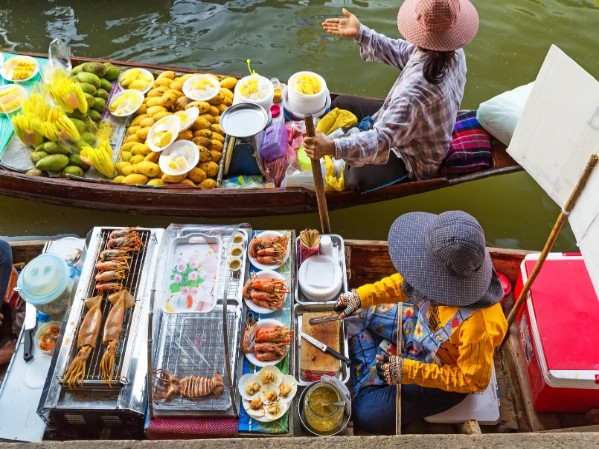
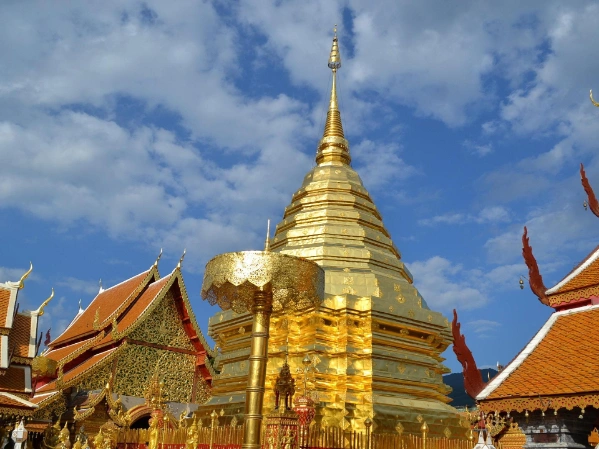
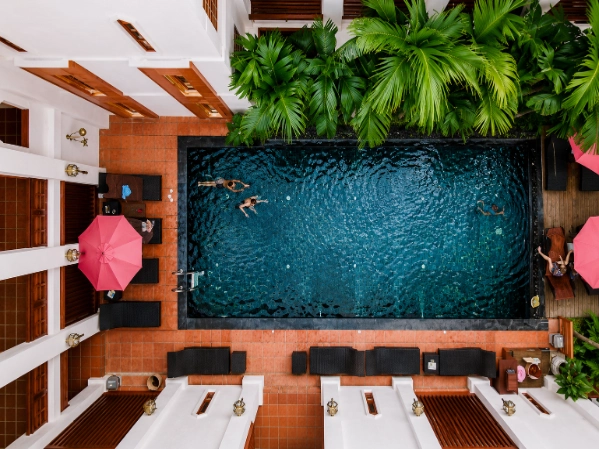
Thailand’s capital, Bangkok, is a brilliant sensory overload of temples, street food, and urban energy. Explore the grandeur of the Grand Palace and Wat Pho, drift through the floating markets and backwater canals, experience some of Asia’s best street food, and end the evening at one of the city’s iconic rooftop bars.
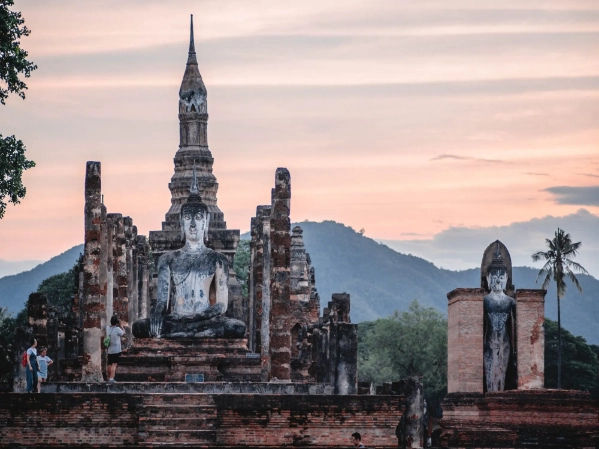
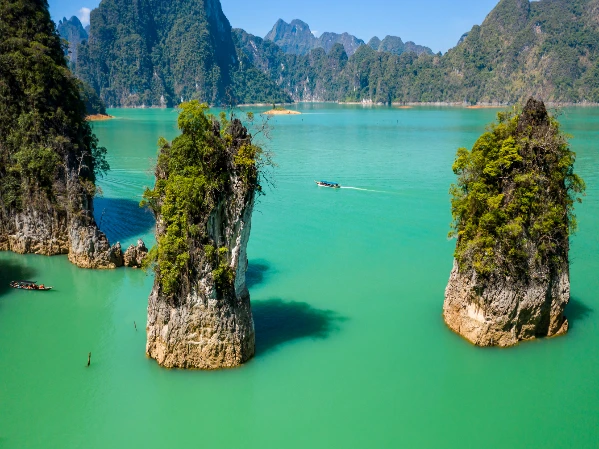
Central Thailand has the country’s most rewarding historical and coastal experiences, stretching from the ancient kingdoms of Ayutthaya and Sukhothai to the relaxed beach towns of the Gulf coast. Kanchanaburi adds a layer of wartime heritage framed by waterfalls and jungle, while Khao Yai National Park is an ancient rainforest set dramatically among towering limestone karsts and centred on the vast Cheow Lan Lake. Jungle camps and floating raft houses offer some of Thailand’s most unique and memorable accommodation experiences. It’s a region of genuine variety — equally suited to history lovers, nature seekers, and those after a quieter coastal escape.
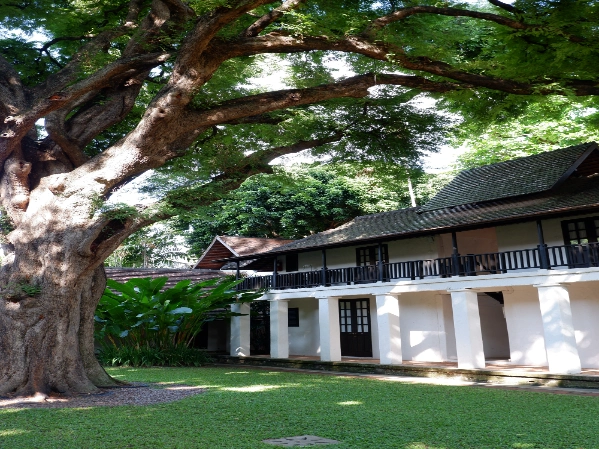
Northern Thailand offers a cooler, greener, and more culturally layered experience than the Thailand of beaches and islands. The North is anchored by Chiang Mai, and spreads outward into mountain landscapes, hill tribe villages, and remote border provinces. Chiang Rai and the Golden Triangle carry a distinct character shaped by proximity to Myanmar and Laos, while Pai and Mae Hong Son reward those willing to venture further with scenery and stillness that feels far removed from the tourist trail.
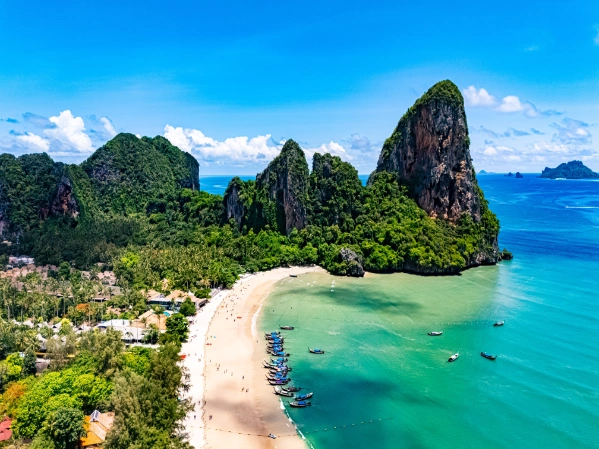
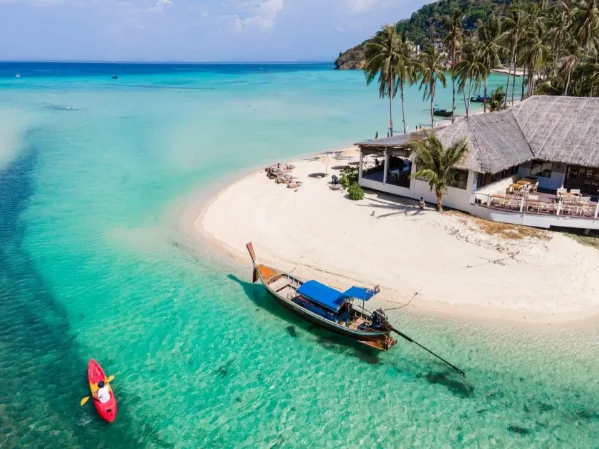
Thailand’s Andaman coastline stretches from Khao Lak in the north down through Phuket, Krabi, and the islands beyond, offering some of Southeast Asia’s most dramatic scenery. Limestone karsts, turquoise water, and white-sand beaches define the landscape, with options ranging from lively resort hubs to near-deserted island retreats. The southwest monsoon affects the region roughly May to October, so timing matters when planning a visit.
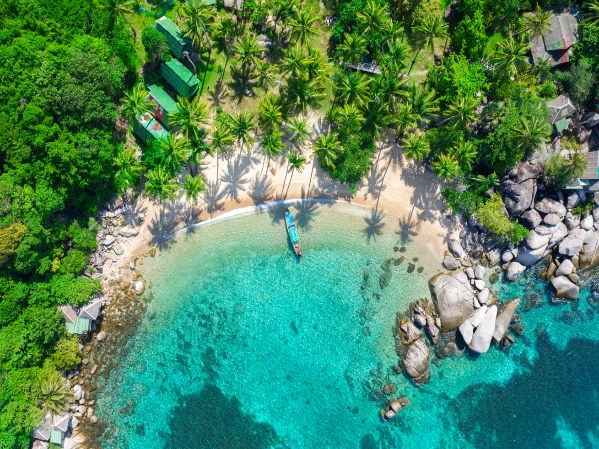
The Gulf coast and its islands offer a warmer, calmer alternative to the Andaman side, with a more accessible feel and a broader spread of traveller types. Koh Samui, Koh Phangan, and Koh Tao form the region’s most popular island chain, each with a distinct character — from resort polished to party-fuelled to dive-focused. The Gulf’s monsoon season runs offset to the Andaman, making it a reliable option when the west coast is at its wettest.
The best time to go varies depending on which area you want to visit.
- In the south, the western beaches on the Andaman coast and the eastern beaches on the Gulf coast have different climates.
- For the western beaches such as Phuket and Krabi, dry season is November – early April, making this the ideal time to visit these areas. This is a good time to visit beaches further north and Bangkok too.
- The eastern beaches such as Koh Samui and Koh Phangan are best visited between January and September, to avoid the rainy season between October and December. January to April is warm and sunny, whereas April to August is the hotter season.
- Peak season for Thailand is between November and February, as most of Thailand is dry and warm.
Main Tourist Destinations: (in alphabetical order)
Bangkok, Chiang Mai, Chiang Rai, Golden Triangle, Kanchanaburi (bridge over the river Kwai), Khao Lak, Khao Yai National Park, Koh Lanta, Koh Phangan, Koh Phi Phi, Koh Samui, Koh Tao, Koh Yao Noi, Koh Yao Yai, Krabi, Mae Hong Son, Phuket, Pai.
Capital:
Bangkok
Main Airports
- Bangkok:
- Suvarnabhumi Airport (BKK) – the largest and busiest airport in Thailand
- Don Mueang International Airport (DMK) – a hub for budget airlines
- Phuket: Phuket International Airport (HKT) – a major tourist hub
- Chiang Mai: Chiang Mai International Airport (CNX) – a cultural and adventure hub
- Chiang Rai: Chiang Rai International Airport (CEI) – a peaceful northern gateway
- Hat Yai: Hat Yai International Airport (HDY) – a connector to southern Thailand and Malaysia
- Koh Samui: Samui International Airport (USM) – a boutique island airport
- Krabi: Krabi International Airport (KBV) – a gateway to Railay and Phi Phi
- Surat Thani: Surat Thani International Airport (URT) – a gateway to the Gulf Islands
- Udon Thani: Udon Thani International Airport (UTH) – a regional hub
- U-Tapao: U-Tapao International Airport (UTP) – near Pattaya and Rayong
Local Language:
Thai
Visa:
Visa Exemption: You can stay for 60 days without a visa for tourism or business. You’ll need to complete the Thailand Digital Arrival Card (TDAC) within 72 hours before arrival.
See: Royal Thai Embassy, London
Requirements:
- Passport valid for ≥6 months
- TDAC QR code
- Proof of onward travel
- Accommodation details
- Sufficient funds (THB 20,000 or ~£450)
Time Zone
GMT +7 hours
Currency:
Thai Baht
- Exchange rates fluctuate, but ~1 GBP ≈ 45-50 THB.
- ATMs widely available, but check your bank’s fees.
- Credit cards accepted in tourist areas.
- Baht is the way to go for street food and local markets.
Electricity:
220V, 50 Hz
Type A (2-pin) and Type C (Europlug) are most common. A universal power adaptor is recommended.
Fun Fact:
Thailand has a water festival called Songkran where people splash water on each other to celebrate the new year. It’s basically the world’s biggest water fight, and everyone’s invited! Streets become rivers, and tourists get soaked (in a good way).