
Dharamshala
Lying in the shadow of the mighty Dhauladhar range is the quaint town of Dharamshala. Divided into two halves; Kotwali Bazar and nearby markets make up Lower Dharamshala, with the township of Mcleodganj in the higher regions, surrounded by think pine, cedar and Himalayan oak forests. With rising altitude, the summer temperature between Lower and Upper Dharamshala can change dramatically from warm to cool climes. Dharamshala is reached by an 18 km gradual uphill drive from Kangra.
Mcleodganj is most well known as it serves as the capital of the Tibetan Government in exile. It was in the wake of the Tibetan uprising of 1959 that His Holiness the 14th Dalai Lama escaped from Lhasa. Choosing Mcleodganj for an abode in exile saw an influx of Tibetan population that followed him into exile. Often referred to as ‘Little Lhasa’ the vivid character of the city today attracts many famous people, including country heads, filmmakers and diplomats to Mcleodganj, Dharamshala from all over the world.
Colonial influence, however, has its imprint intact in the town which can be spotted in many buildings, a church and other landmarks of the era scattered around the town and its suburbs.
Locations
McLeodGanj
↓
↑
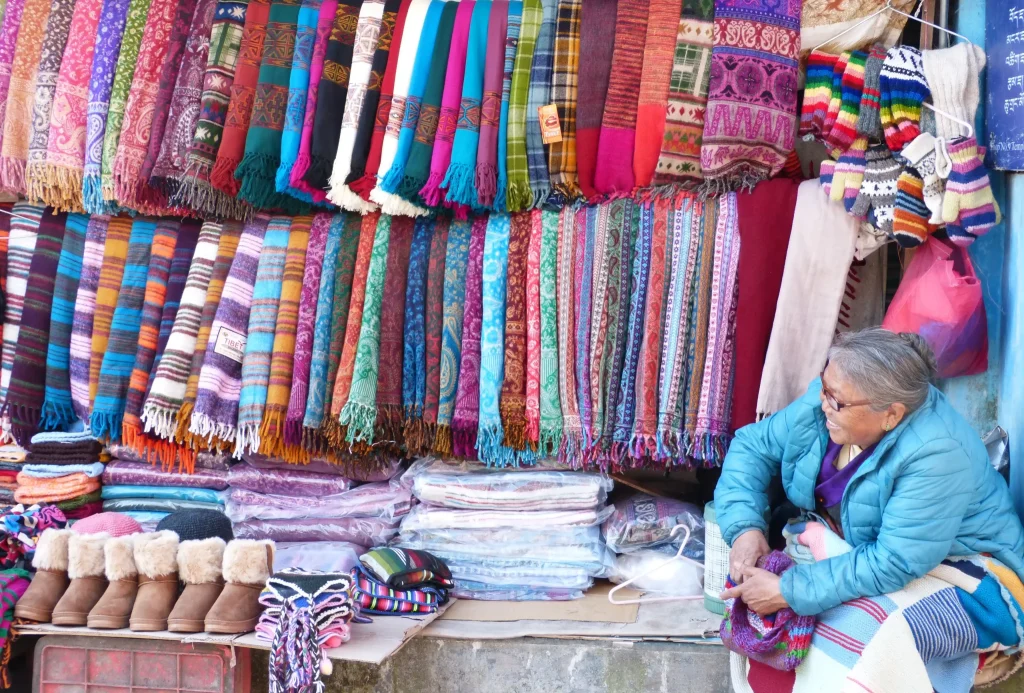
Dharamshala owes its charm and character to the allure spun by the McLeodGanj. Home of the exiles Dalai Lama and dominated by the Tibetan community, the suburb at an elevation of 2,082 m is also referred to as mini Lhasa. The main street of McLeodGanj is sprinkled with Tibetan craft shops and amazing eateries serving fresh and savoury dishes cooked with a tinge of Tibetan cooking flavours.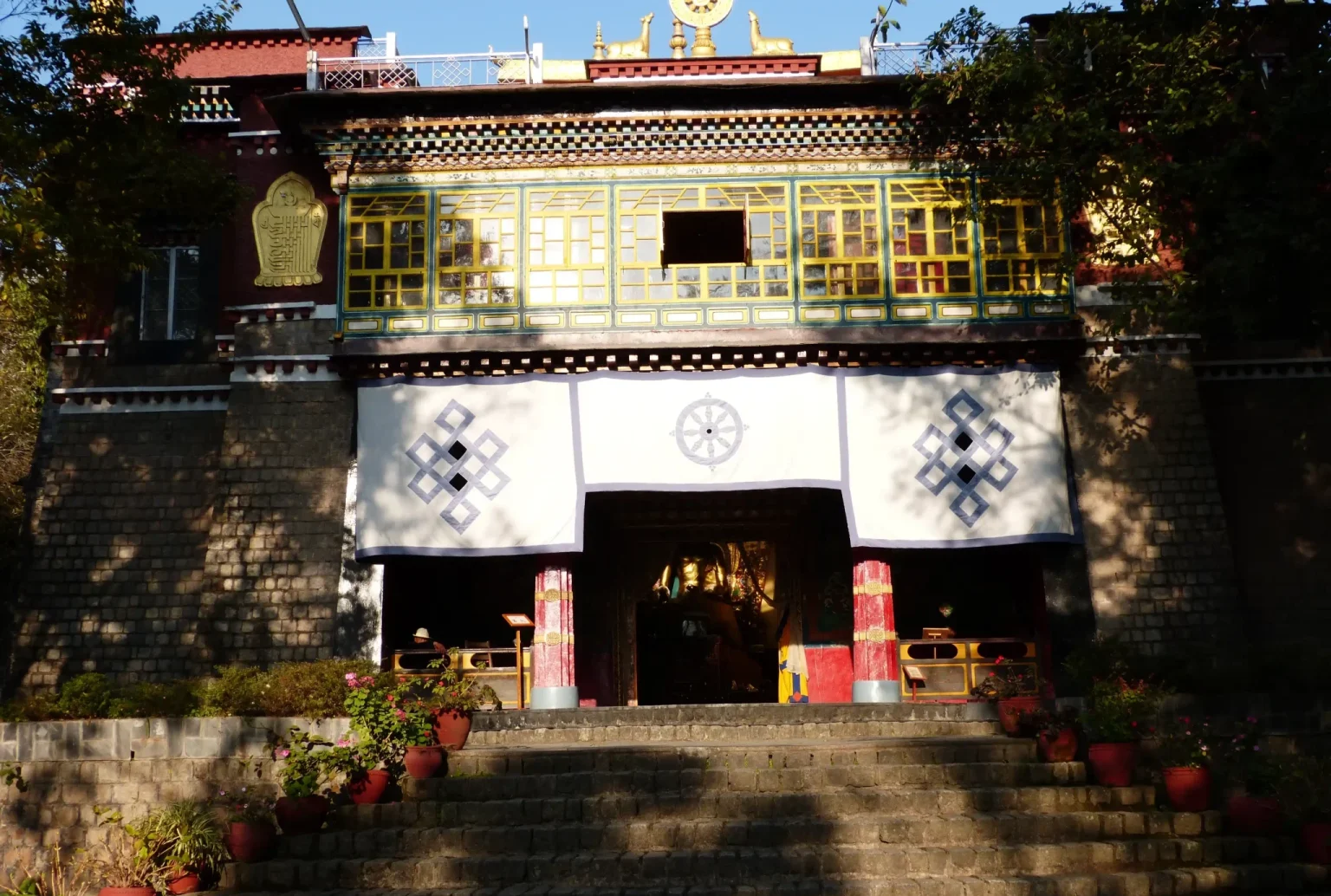
Norbulingka Institute
↓
↑
The institute was founded in 1995 by Kelsang and Kim Yeshi to preserve Tibetan arts, crafts and culture. It is an attractive complex with stream running through well maintained Japanese style gardens. You can see craftsmen at work on various forms of Tibetan arts and crafts. Norbulingka Institute at Sidhpur is located 7 km from Dharamshala.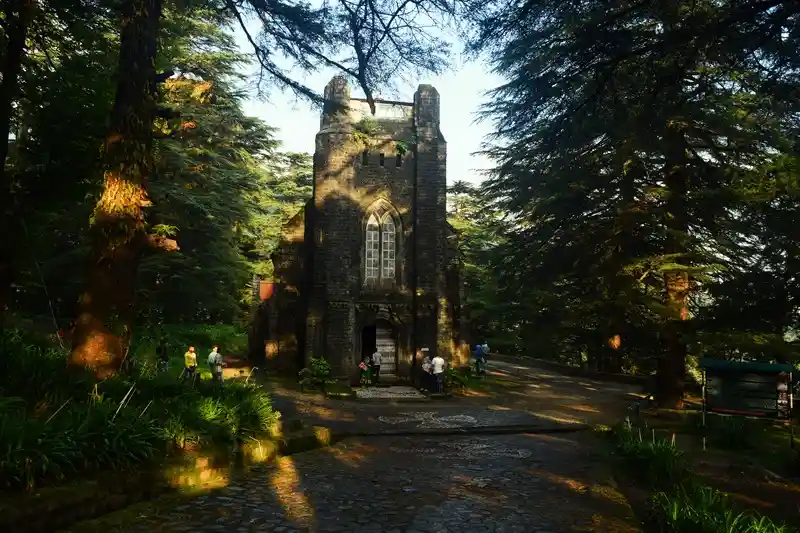
St. John Church in the Wilderness
↓
↑
A relic of the British Raj, the St. John Church in the Wilderness was constructed in 1852 and is set in a forest at Forsyth Ganj. Built in the neo-Gothic architecture style, much of the structure survived a devastating earthquake in 1905 which flattened most buildings in the Kangra valley. Within its compound lies buried Lord Elgin, a Viceroy from 1862-63. The church has some fine Belgian stained glass windows.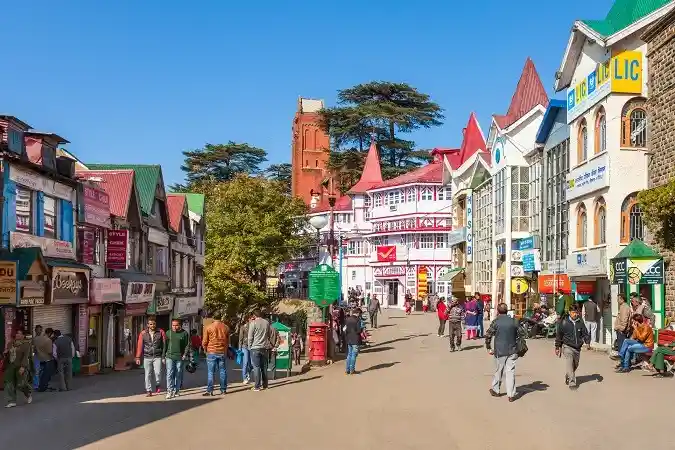
The Mall
↓
↑
The Mall is the main street of the hill station. Running parallel but lower to The Ridge, this shopping area is dotted with modern day showrooms, departmental stores and hip restaurants. The front side of Gaiety Theatre and Town Hall buildings are on this street. Himachal Emporium at the west end of the arcade sells locally made handicrafts and handloom products. Scandal Point, the place where The Ridge and The Mall converge, is a good place to catch up with the day’s news and gossip.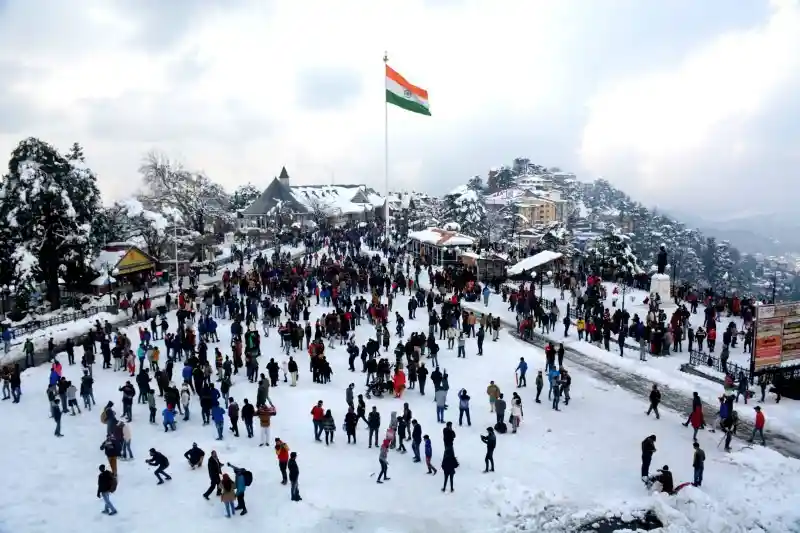
The Ridge
↓
↑
The large open space that runs east to west alongside The Mall Road is the cultural hub of the city. On a clear day, the views of the snow peaks of the Himalayan ranges to the north are spectacular. The neo-gothic towering architecture of Christ Church, the state library, the statue of Mahatma Gandhi, Gaiety Theater and the Town Hall are important landmarks on The Ridge. An underground reservoir build in the 1880s is still one of the major storage for meeting the cities everyday water needs.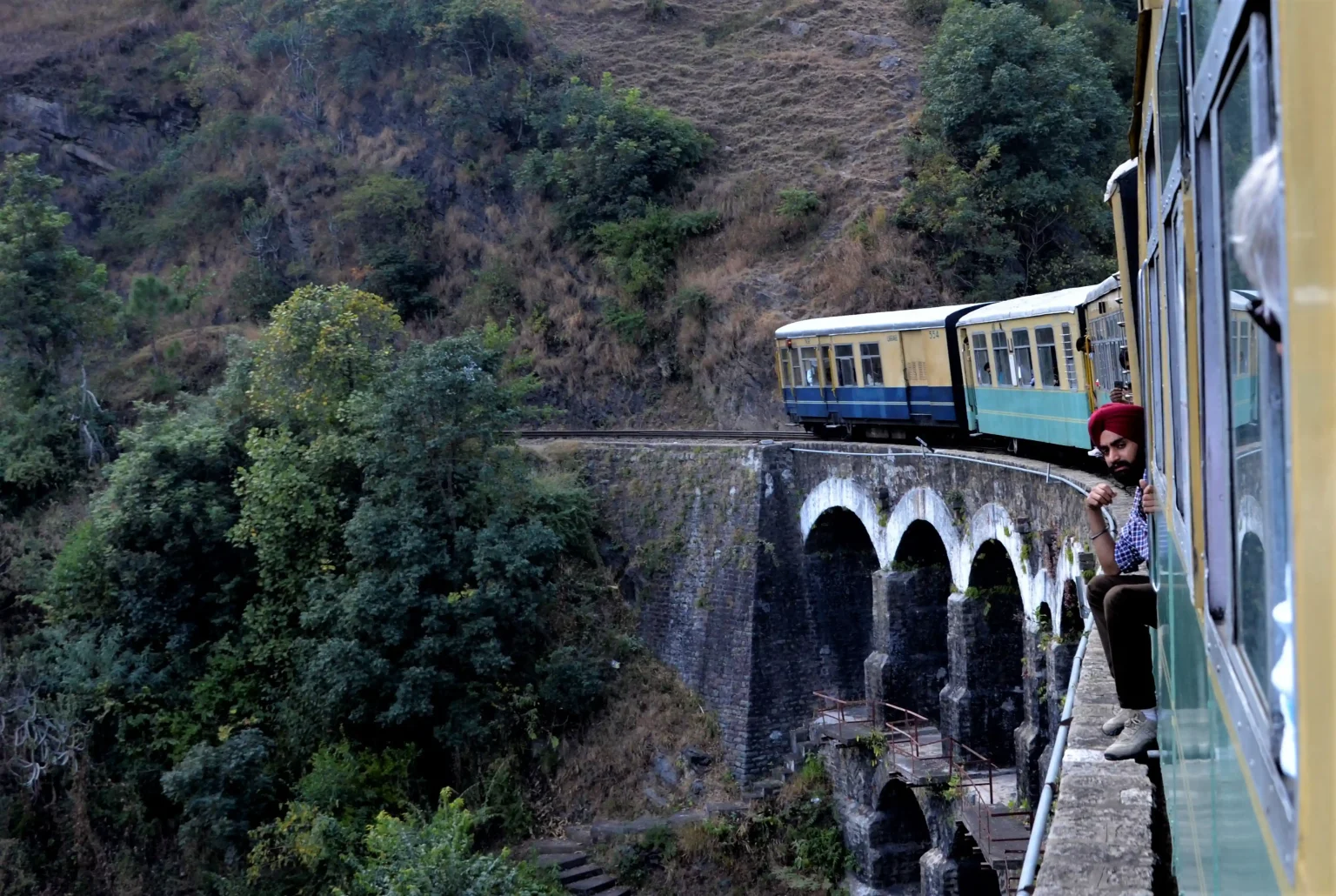
Toy Train
↓
↑
The UNESCO World Heritage Kalka-Shimla toy train was built by the British in 1903 to provide access to their summer capital of Shimla. It is one of the most scenic train journeys in India. The captivating train route runs for 96 kilometers (60 miles) though 20 railway stations, 103 tunnels, 800 bridges, and an incredible 900 curves. It takes 5-6 hours for the journey from Shimla to Kalka although some people opt to leave the train at Kandaghat and continue to Kalka by car.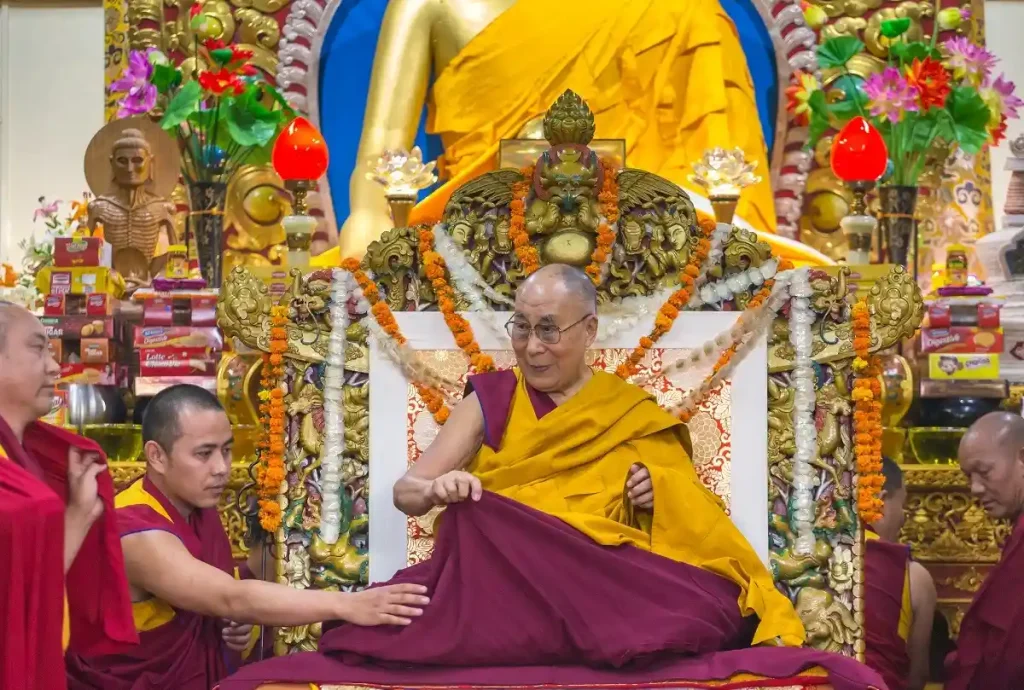
Tsuglakhang Temple
↓
↑
Located in the heart of McLeodGanj and close to the residence of the Dalai Lama, this is an important Buddhist pilgrimage spot. The Dalai Lama frequently visits this temple to preach and bless. Inside the temple, you can find a statue of Buddha sitting on a carved pedestal. Pilgrims walk around the statue in clockwise direction as they rotate the prayer wheels. There is a large hall inside the temple for people to meditate.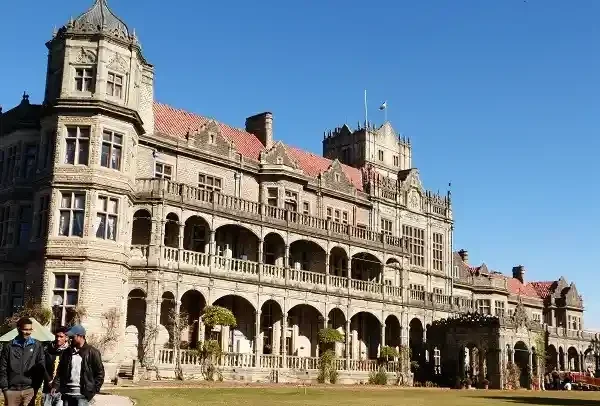
Viceregal Lodge
↓
↑
When completed in 1888, the Viceregal Lodge was one of the most flamboyant and one of the first electric buildings of India. Built by architect Henry Irwin, the overall appearance of the imposing structure is that of a Scottish castle. Much history has unfolded in this building and one room still retains the table where the boundaries of Pakistan were cut out from India. After Independence the building became a part of the Presidential Estate and was subsequently donated by President S Radhakrishnan for promoting higher education. It now houses the Indian Institute of Advanced Studies. Parts of the Lodge are open to visitors.Hotels
Discover the wonderful variety of places to stay in India; including some of the most luxurious hotels in the world, intimate boutique hotels bursting with local character, charming homestays where you’ll have a chance to interact with local families, converted forts & palaces, fabulous lodges and heritage havelis.
More to follow
Dharamshala Tours
Below are a selection of our favourite sample itineraries that we have created based on our experiences of travelling extensively throughout India. As with all our tours, every aspect can be tailor-made to your individual requirements.
More to follow
More to follow
More to follow
More to follow
More to follow