Delhi
Delhi is a city with a rich and ancient history, long before the Mughals made it their capital. It has been a significant centre of power, culture, and trade for over a thousand years, with its roots stretching back to the ancient city of Indraprastha mentioned in the Mahabharata. The Mughals built grand palaces, forts, and the walled city of Shahjahanabad between 1638 and 1649, further enhancing Delhi’s prominence. After the decline of the Mughal Empire in 1857, the British initially moved the capital to Calcutta but later commissioned the construction of ‘New Delhi’ to the southwest of ‘Old Delhi.’ New Delhi became the capital of India in 1931
Highlights
Raj Ghat
↓
↑
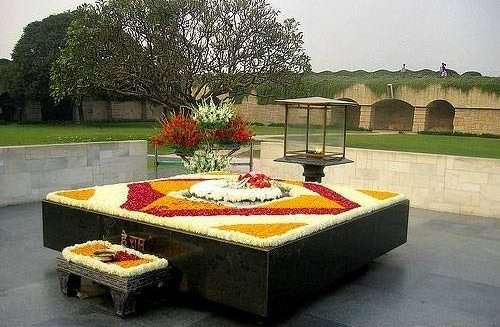
Raj Ghat is a memorial to Mahatma Gandhi. It is a simple black marble platform, often draped with garlands of orange marigolds, that marks the spot of Mahatma Gandhi’s cremation, on 31 January 1948, a day after his assassination. It is left open to the sky while an eternal flame burns perpetually at one end.
Chandni Chowk
↓
↑
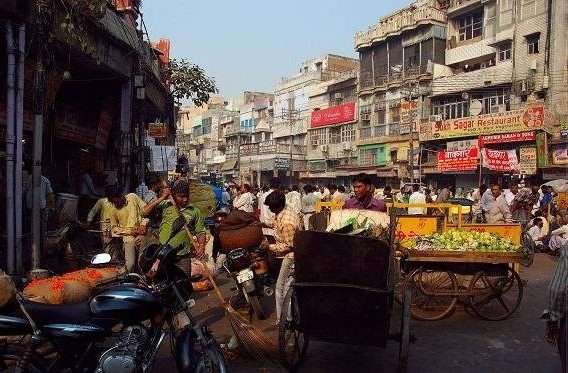
Chandni Chowk or “Moonlit Square”, dates back to the foundation of the city of Shahjahanabad when the Mughal emperor, Shah Jahan established the Red Fort on the banks of the River Yamuna beside his newly founded capital city of Shahjahanabad. Even though today Chandni Chowk appears choked with religious and commercial activity, it retains its historical character and is the heart of old Dehli. Built in the 17th century, the market was once divided by canals for water supply and to reflect the moonlight.
Red Fort
↓
↑
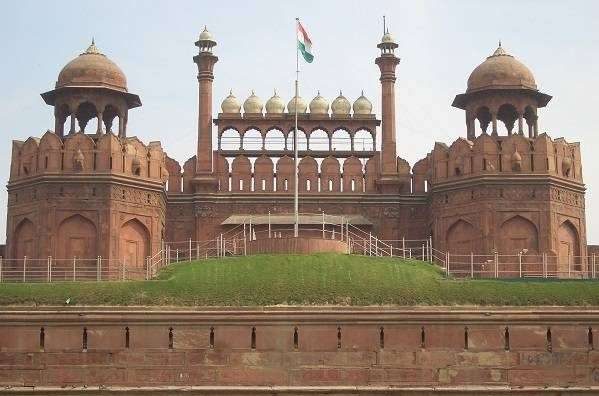
The Red Fort derives its name from the extensive use of red sandstone on the massive walls that surround the fort. The Moghal Emperor Shah Jahan commissioned the construction of the Red Fort in 1638 when he decided to shift his capital from Agra to Delhi. The fortress palace was an important focal point of the medieval city of Shahjahanabad (present day Old Delhi). It is a UNESCO World Heritage site.
Lakshmi Narayan Temple
↓
↑
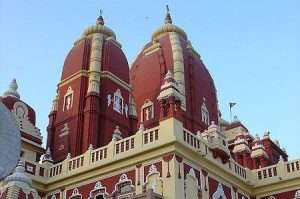
The three-storied temple is built in the northern or style of Hindu temple architecture. The entire temple is adorned with carvings depicting the scenes from Hindu mythology. More than a hundred skilled artisans carved the icons of the temple. The construction of temple dedicated to Laxmi Narayana started in 1933, built by industrialist and philanthropist Baldeo Das Birla. One of the earliertst temples without caste restrictions as requested by Mahatma Gandhi.
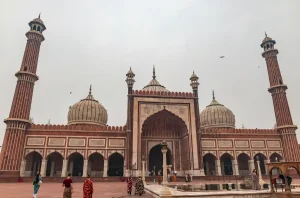
Jama Masjid
↓
↑
The three-storied temple is built in the northern or style of Hindu temple architecture. The entire temple is adorned with carvings depicting the scenes from Hindu mythology. More than a hundred skilled artisans carved the icons of the temple. The construction of temple dedicated to Laxmi Narayana started in 1933, built by industrialist and philanthropist Baldeo Das Birla. One of the earliertst temples without caste restrictions as requested by Mahatma Gandhi.
Gurdwara Bangla Sahib
↓
↑
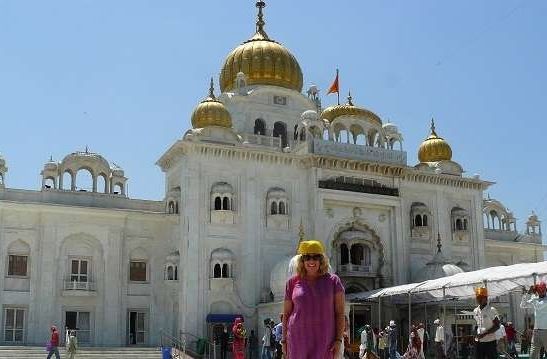
Gurdwara Bangla Sahib is the most prominent Sikh Gurdwara, or Sikh house of worship, in Delhi. All people, regardless of race or religion may eat in the Gurdwara kitchen, the food having been prepared by a mixture of gursikhs who work there and volunteers.
India Gate
↓
↑
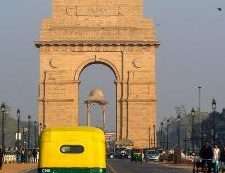
The 42 m high India Gate is the national monument of India. Situated in the heart of New Delhi, it was designed by Sir Edwin Lutyens. Originally, a statue of George V, Emperor of India stood under the now vacant canopy in front of the India Gate, but it was removed to Coronation Park together with a number of other British Raj-era statues. Following India’s independence, the India Gate became the site of the Indian Army’s Tomb of the Unknown Soldier.
↓
↑
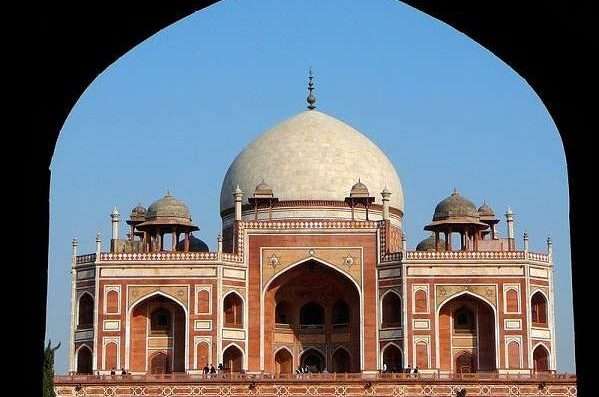
A UNESCO World Heritage site completed in 1572. Humayun was the second Mughal Emporer and this is the first example of a Mughal garden tomb. It is clearly an inspiration for later monuments including the Taj Mahal. It is perfectly symmetrical and truly impressive in terms of its size and intricate stone work.
Qutub Minar
↓
↑
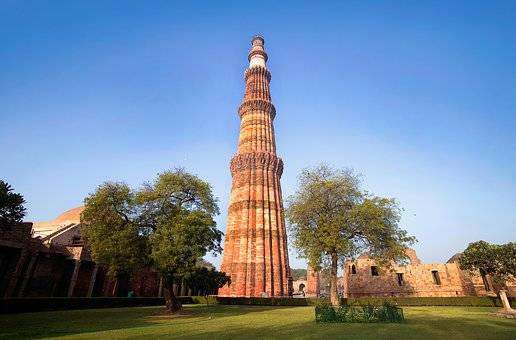
India’s tallest minar, Qutub Minar (Arabic for pole or axis), marks the site of the first muslim kingdom in northern India. Qutub Minar’s construction started in 1192 and is made of red sandstone and marble: it is a UNESCO World Heritage site. The tower has 379 stairs, is 72.5 metres high, and has a base diameter of 14.3 metres, which narrows to 2.7 metres at the top storey.
Iron Pillar
↓
↑
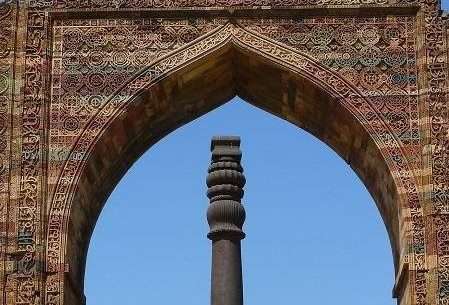
Also in the Qutub complex and close to the Minar is a metallurgical curiosity, the 7m high iron pillar. According to the traditional belief, anyone who can encircle the entire column with their arms, while standing with their back against the pillar, can have their wish granted. The amalgamation of different metals with iron produces a high degree of smoothness and has probably prevented any corrosion.
Akshardham Temple
↓
↑
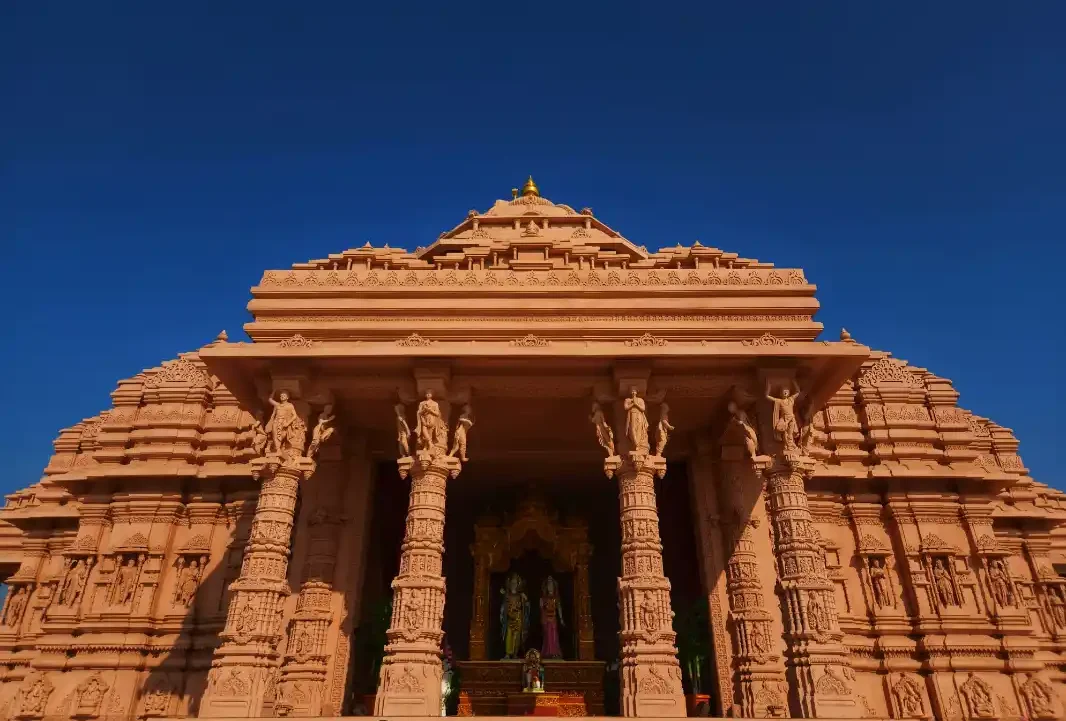
Akshardham Temple should definitely be on your list, when visiting New Delhi. With detailed carvings and sculptures this temple is filled with Indian Culture. The temple allows its visitors to experience a sense of serenity and allow them to take in the rich heritage India as a country offers.Hotels
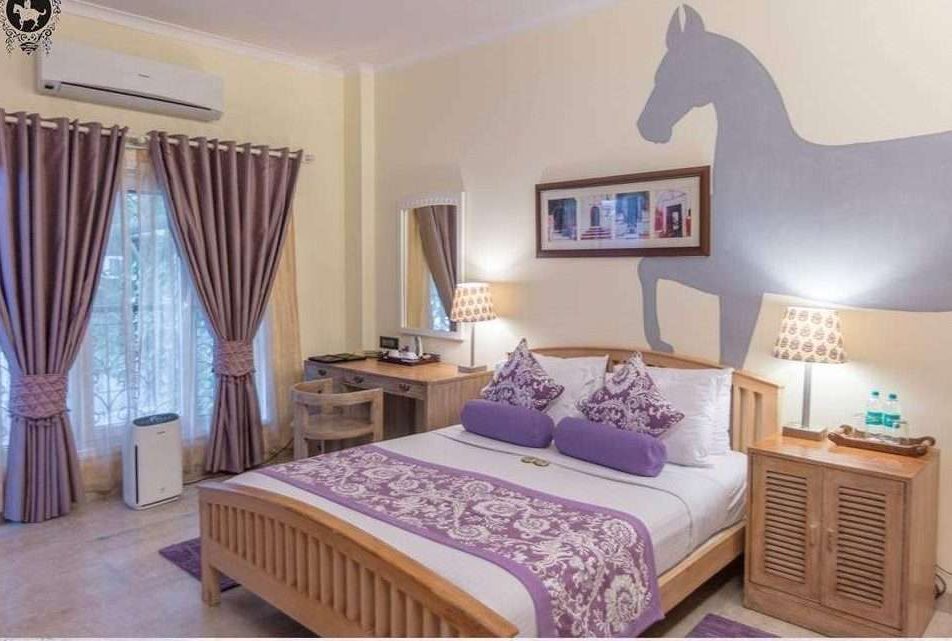
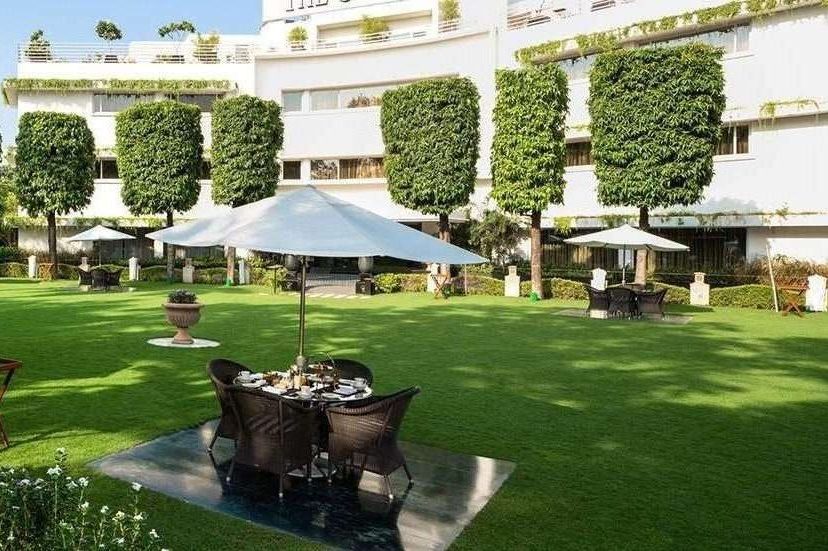
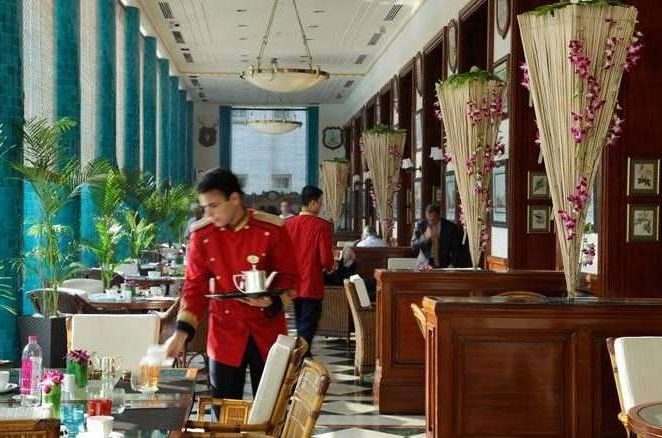
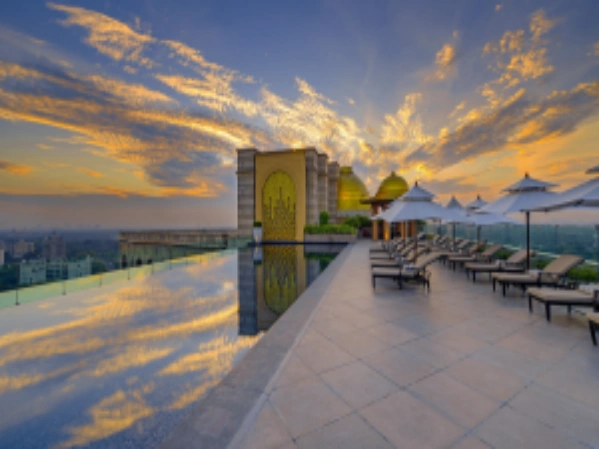
Discover the wonderful variety of places to stay in Delhi; including some of the most luxurious hotels in the world, intimate boutique hotels bursting with local character, charming homestays where you’ll have a chance to interact with local families, converted forts & palaces, fabulous lodges and heritage have
Delhi Tours
Below are a selection of our favourite sample itineraries that we have created based on our experiences of travelling extensively throughout India. As with all our tours, every aspect can be tailor-made to your individual requirements.
Airports: Indira Gandhi International Airport.
Terminals 2 and 3 domestic airport for GoFirst, IndiGo and SpiceJet. Situated 4.7miles from main International Airport.
Local Language: Hindi
Fun Fact: New Delhi’s Khari Baoli Market is Asia’s largest wholesale spice market. It also might be the largest in the world. If you love spiced food, then this market is a must visit.
There are many reasons to visit Delhi, but here are a few we think are the most important. Take in the iconic monuments, from Qutub Minar to Humayun’s Tomb which are both UNESCO World Heritage sites, definitely worth visiting. There is also the option to explore the more spiritual side of India, in Delhi with the picturesque Akshardham Temple and the Jama Masjid.
Once setting foot in Delhi you wont want to leave with its infectious atmosphere, delicious street food, nightlife and unique markets.
Republic Day – Rajpath Delhi, 26th January
Delhi Republic Day parade is held in the capital, New Delhi. Commencing from the gates of the Rashtrapati Bhavan (the President’s residence), Raisina Hill on Rajpath past the India Gate, this event is the main attraction of India’s Republic Day celebrations lasting three days. The parade showcases India’s Defence Capability, Cultural and Social Heritage
Mango Festival – Dilli Haat, Pitampura, New Delhi, 6-8 July
As the king of all tropical fruit – “mango” makes the hot summer delicious; the mango festival celebrates the scrumptious fruit and everything about it. The festival is celebrated with entertaining activities and events, like quizzes, mango eating competitions, slogan writing, mango carving, mango judging, children’s shows, dance performances, arts and crafts, mango tasting, and plenty more.
Phoolwari-Ki-Sair – Shrine of Devi Jog Maya, September
Phoolwari Ki Sair also known as the ‘flowers sellers’ festival’ is a colourful procession of flowers walk through the Mehrauli Bazaar led by fire dancers from the Temple of Jog Maya to the Tomb of Saint Qutb-ud-din Bakhtiyar Kaki where a curtain made of different variety of flowers are placed on his tomb as respect and honour.
The best time to visit Delhi is from October to March when the weather is at its best. During this period flowers are at their blooming best, the weather is pleasent and enjoyable to experience Incredible Delhi.
Delhi
| Month | Jan | Feb | March | April | May | Jun | Jul | Aug | Sep | Oct | Nov | Dec |
|---|---|---|---|---|---|---|---|---|---|---|---|---|
| Max °C | 21 | 24 | 29 | 36 | 40 | 39 | 35 | 34 | 34 | 33 | 28 | 23 |
| Min °C | 8 | 10 | 15 | 21 | 26 | 28 | 27 | 26 | 25 | 19 | 13 | 8 |
| Rain mm | 21 | 20 | 14 | 11 | 23 | 77 | 214 | 253 | 121 | 17 | 4 | 9 |