MP National
Parks
Khajuraho is a world famous site known for its magnificently sculptured group of temples. These Hindu and Jain monuments were built by the Chandela Dynasty between 950 AD and 1050 AD.
The exquisitely carved and embellished temples are simply stunning.Out of the 85 temples believed to have been built across 21 square Kms, only 22 temples are remain in a 6 square Km area. However, those that left are well preserved, mainly as they are so remote.
The Khajuraho temples, now a UNESCO world heritage site, were rediscovered within dense forest in 1838 by Captain T.S. Burt.of the Bengal Engineers.
Highlights
Bandhavgarh
↓
↑
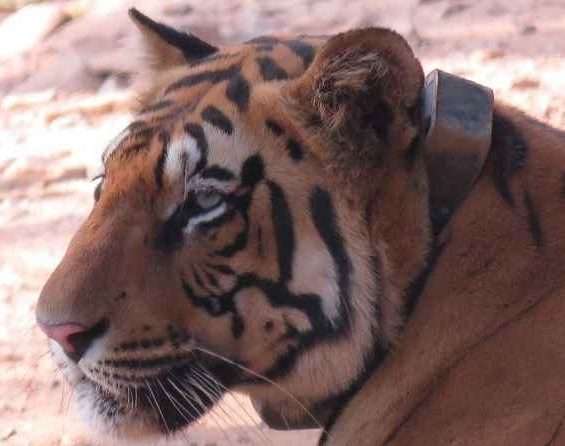
Bandhavgarh is quite a mountainous and attractive park with jeeps often scrabbling over rocky surfaces. Our guide followed clues to a spot where he thought there was tiger near by. Soon other jeeps had joined us on the track and a park ranger on elephant back went into the forest to investigate. He reported back to say that a tiger was eating its kill 50m from the track. We waited as the guide said this particular female had probably left her cubs on the other side of the track so she would probably cross the track once she had finished feeding. We waited and could actually hear her crunching bones and smell the flesh being eaten. Eventually she came out of the bush and nonchalantly crossed the track, as predicted.
Kanha
↓
↑
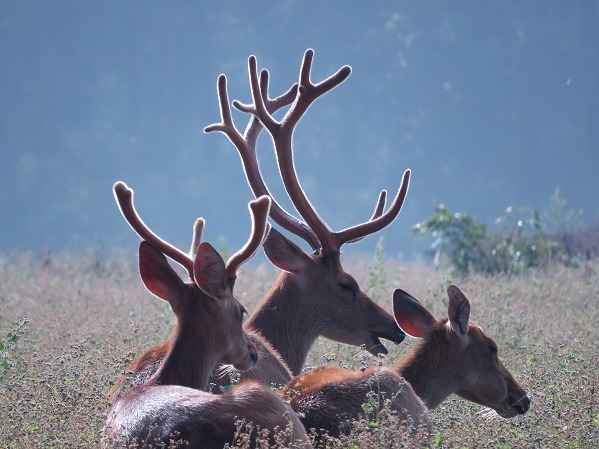
Kanha Tiger Reserve is spread over an area of 1,949 sq km making it one of the best parks for tigers in India. Kanha’s undulating landscape is dotted with dense groves of vegetation, hillocks and meadows. Of all these habitats, it is Kanha’s meadows that are most important, as they sustain large numbers of Chital, Sambar, Barasingha and Gaur, which in turn support populations of predators (Tigers, Leopards, Wild Dogs, Jungle Cats and Foxes). The park is primarily a mixed deciduous forest of mainly Sal and Bamboo. It is home to over 1,000 species of flowering plants and about 350 species of birds. Its greatest achievement has been the preservation of Hard Ground Swamp Deer or Barasingha (see image on tile, above) from near extinction (they numbered just 66 in 1970). Today, they number more than 400 and are the only surviving population of Barasingha in the wild.
Satpura
↓
↑
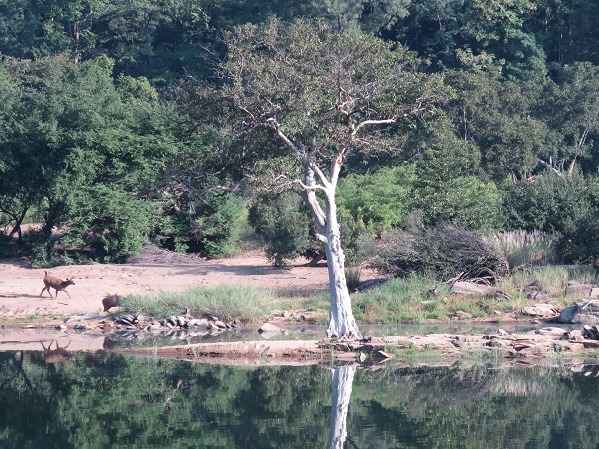
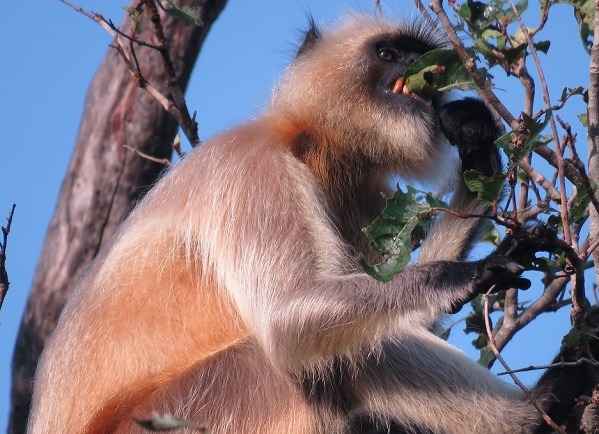
Satpura is a Sanskrit word, that means seven mountains (sapta=seven & pura=mountain). Satpura National Park is spread over 1427 sq km and an altitude range of 300 to 1,352 metres. This unspoiled highland eco-system is extremely rugged and consists of fascinating deep valleys, sandstone peaks, narrow gorges, rivulets, waterfalls, thick dense green forest of Sal and other medicinal herbs, it also has large tracts of Teak forests. Satpura doesn’t have as many tigers as the other parks and so sightings are less common. However, it is probably the most beautiful park, accessed across the Tawa reservoir. Safaris can be taken by jeep, walking or by boat/canoe. It is also much less impacted by tourism so you are unlikely to see many other tourists in the jungle. Its fauna comprises Spotted Dear, large Indian Bison (Gaur), Tigers, Leopards, Wild boar, Wild dog, Sloth bear, Black buck, Porcupine, Sambhar, Four Horned antelopes (Chowsingha), Otters, Crocodile, Malabar squirrels, Langurs etc. It offers good bird watching opportunities due to its unique terrain and many water bodies including the Tawa reservoir; from November to March it also hosts a variety of migratory birds.
Panna
↓
↑
Panna National Park is spread over 1645 sq. km and in 1994 it became Indias 22nd Tiger Reserve. It is predominantly an open forest and offers great opportunity to view animals like Tiger, Sloth Bear, Cheetal, Sambhar and Nilgai. Panna is also home to crocodiles (the mugger and long snout gharial), and over 300 species of birds, many of which can be seen via boat trips along the Ken river.
Pench
↓
↑
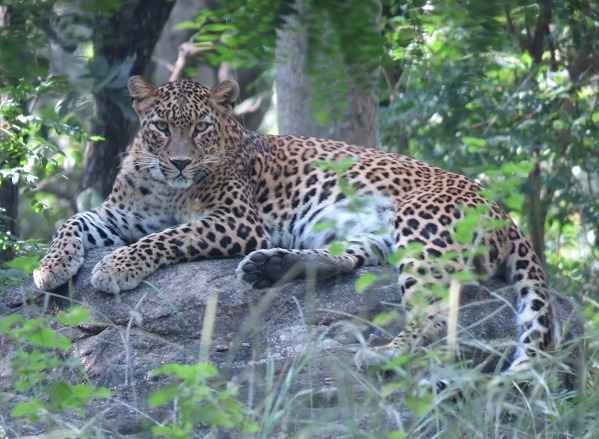
This Tiger Reserve, located in the southern reaches of the Satpura hill ranges and set up in 1992 has a total area of 758 sq Kms. Landscapes include scrublands, deciduous forest of Teaks and many lakes, streams, and the Pench river which all encouraged Rudyard Kipling to write his ” Jungle Book” Animal species include Chital, sambhar, nilgai, wildboar & jackal, Leopard (see photo we took, above), sloth bear, wild dog, porcupine, jungle cat, fox, striped hyena, guar, chowsingha & barking deer. Pench also has an estimated 65 Tigers. The park boasts more than 250 species of birds including including peafowl, jungle fowl, crow, pheasant, red vented bulbul, magpie robin, lesser whistling teal, pintail, shovellar, egrets & heron.Hotels
Discover the wonderful variety of places to stay in India; including some of the most luxurious hotels in the world, intimate boutique hotels bursting with local character, charming homestays where you’ll have a chance to interact with local families, converted forts & palaces, fabulous lodges and heritage havelis.
Tours
Below are a selection of our favourite sample itineraries that we have created based on our experiences of travelling extensively throughout India. As with all our tours, every aspect can be tailor-made to your individual requirements.